Translate

Sunday, April 7, 2013

We Need to Talk About Kevin (Lionel Shriver)


When I heard an interview with Lionel Shriver, the author of We Need to Talk About Kevin, on NPR, I was fascinated not only by the discussion of the too-pertinent story of Kevin Khatchadourian, a teenager who shoots up his school, but also by Shriver’s own non-pandering demeanor. I knew immediately that I liked this author and wanted to read her book.


The story is written as a series of letters from Kevin’s mother, Eva, to her her estranged husband, Kevin’s father, Franklin. The dense and formal prose is somewhat unexpected and intimidating, but it establishes Eva’s character perfectly: She’s a highly successful travel writer by trade, and she can be conspicuously cosmopolitan and condescending.


Eva misses Franklin, and her letters read like a sort of self-therapy. She recollects the entire marriage, beginning with their indecision, and finally, decision to have a child. Her monologue is largely philosophical, especially in the beginning. Although the story moves slowly until her pregnancy, you should read these early chapters with patience and care, as they establish the critical dynamics of Eva and Franklin’s separate relationships with Kevin. Once Kevin is born, the story gains momentum with astounding episodes of his schemes and deviances.

Eva’s character is brilliantly complex. You probably won’t think, “Gee, I like this girl!” But still, you will feel some empathy - even genuine sympathy - for her, as she is shockingly honest about her most unflattering thoughts. Yes, she can be pompous, but she wants and tries to be a good mother to Kevin despite her inclinations toward the opposite, and despite his repellant behaviors, as he deliberately and systematically destroys any semblance of her formerly pleasant life.

Franklin, on the other hand, is simple, and pathetically so.  He’s a good-hearted, true-blue kind of guy, the type of person you’d want for your kid’s elementary school teacher, but probably not for your psychoanalyst, and certainly not for the father of the sociopathic teenager next door. Undiscerning of anything outside his cheery, perfect-family bubble, he quickly evolves into Kevin’s oblivious lackey.

From conception, Kevin doggedly commits his existence to the discomfiting of others and the destruction of expressions of love. He seems inherently evil and utterly unlikeable. But through one small event in a novel full of horrible acts, Shriver complicates his character and uncovers the tiniest goodness - or at least normalcy - in him. This is the one thing that keeps the reader in awe of Kevin despite the inevitable revulsion.

I wonder if Kevin’s behavioral profile is similar to that of real-life mass murderers.  Can a person actually be as staunchly hostile as Kevin is from birth?  I don’t know how Shriver researched the story, and I’m too lazy to do the work myself, but if you can knowledgeably answer my question, please comment!

Shriver’s erudite prose requires that her reader is no dummy. The language may be daunting at first, but the telling is so eloquent and detailed, the vocabulary so precise, that, if you don’t rush, you’ll get an alluring view into the psyche of one of modern literature’s most multidimensional protagonists.

Lionel Shriver (photo by Walnut Whippet)
If your edition of Kevin includes the “p.s.” in back, don’t skip it!  In three separate sections, Shriver writes a quirky little bio, discusses the book itself, and briefly summarizes several other novels she recommends (including only one of her own). Her written voice is classy and sassy. I admired her writing so much that I also must respect her literary opinion, and I therefore added several of her recommendations to my Better-Read-That list.


Thursday, February 21, 2013

The Autobiography of Benjamin Franklin

After reading Walter Isaacson’s biography of Benjamin Franklin, I fell in love (with Franklin, not Isaacson) and needed more from Ben’s own pen. So I searched out his autobiography, and found it - glory to God - for FREE in iBooks!  After a respectable waiting period on Isaacson’s behalf, I downloaded my way into Franklin’s 18th century reminiscences.

The charm of Ben Franklin’s autobiography is its informal, first-draft feel. It reads like a letter to a friend. In fact, he starts it, “Dear son,” with a similar purpose as Solomon’s Proverbs: to impart knowledge and wisdom. But the challenge of this book is the linguistic style, which can be tricky for modern readers, especially for those unaccustomed to non-contemporary English. Even I had to backtrack a few times for understanding.  

William Franklin, Benjamin's son
In content, the autobiography is a de-uglified miniature of Isaacson’s epic. It addresses several of the same incidents, but it reads more like a series of anecdotes. There’s precious little backstory, and unsurprisingly, Franklin omits most of the unflattering stuff. Still, in his discussions on virtue, industry, and religion, he’s frank about his shortcomings. He emphasises his lessons learned, and as intended, palatably and powerfully delivers a bit of timeless wisdom.

I liked the first half of the book the best, when Franklin describes his time as an apprentice and printer, including his business relationships and professional strategies of varying success. He also touches on the Junto, his philosophical club. I would have given a big toe for a spot in that group, but alas, there were no members of the female inclination. I’d like to talk to Franklin about that gaping omission.

As Franklin transitions into his political career, the content interests me less, but several interpersonal accounts are entertaining enough, especially when he takes a tattling “I’m surrounded by idiots!” tone. Unfortunately, he writes nothing about his familial squabbles (and there were plenty) or his girlfriends (and there were plenty). Probably he found these things too personal or unflattering, or maybe he thought them less important than his career path. Or, perhaps, since Franklin was famously committed to delivering useful inventions, he considered those aspects of his life useless to his purpose of imparting wisdom, although if that were the case, I would disagree.

A meeting of the Junto
The Autobiography of Benjamin Franklin is much shorter and less inclusive than Isaacson’s biography. If you’re as wildly in love with Ben as I am, read it as a companion to the biography to get a broader understanding of his wit, his writing style, his learning and teaching mechanisms, and his thought patterns. If you’re less passionate about the man and just want the general gist of Franklin without committing to 500 pages of Isaacson, then this sweet little volume should suffice.


Friday, January 18, 2013

The Girl with the Dragon Tattoo (Stieg Larsson)

The Girl with the Dragon Tattoo isn’t the type of book I’d normally choose for myself. I’m generally indifferent toward crime novels, and the only ones I’ve read - including this one - have been gifts. But when a colleague left this book on my desk, I didn’t even know its genre. I went into it blindly, but I finished it wide-eyed.

Honestly, it started kind of slowly for me. It’s top-heavy with finance talk, which historically has bored and befuddled me, so the intrigue was a little muddy in my mind. But around the halfway point, the plot comes together and the discussion moves toward family friction, religion, sex, and secrets. I was all there.

The gist of it is this: An old Swedish business tycoon, Henrick Vanger, hires Mikael Blomkvist, a middle-aged financial journalist, to sleuth out the murderer of his niece, Harriet, who had disappeared thirty-six years earlier, when she was a teenager. Mikael initially works by himself but later teams up with Lisbeth Salander, a scrawny young ward of the state with multiple tattoos and piercings and dyed-black hair. As the investigation grows more complex, so does their personal relationship.

Although Mikael is the apparent team lead, Lisbeth has an unusually brilliant mind and one very special skill. I’ll bet that Lisbeth could have easily carried the investigation with Mikael, or practically anyone, as her assistant. Perhaps Lisbeth will be the clear leader in the sequels (The Girl Who Played with Fire and The Girl Who Kicked the Hornet’s Nest, both of which my friend subsequently left on my desk - Yay! No spoilers, please!) 

Noomi Rapace as Lisbeth Salander

Larsson submitted his manuscripts for this series shortly before his death in 2004. Written in Swedish under the original title, “Män som hatar kvinnor,” which translates to “Men who hate women,” the story features horrific misogynistic acts. Some scenes are unsettlingly violent, but they effectively establish the evil dynamic underlying the entire plot. Larsson also includes a substantial subplot with a secondary mystery for Mikael and Lisbeth to solve - and to profit from.

I, of course, read the English translation, and as usual, I wish I could report on the author’s true stylistic tone. I can say that Reg Keeland’s translation is clear and effectively dramatic, if not poetic or linguistically inspired. Contrary to the descriptions on the back cover, I did not find the The Girl with the Dragon Tattoo “mesmerizing” or a “blazing literary sensation,” but it was an engaging, intelligently plotted story that delves into misogynism, sexual abuse, societal prejudice, religious fanaticism, and Naziism.

Stieg Larrson
I understand that movies have been made of this story, a Swedish version and an English version. Naturally, I haven’t seen them. Some people have told me that the English movie is good. Others have said that the Swedish one is okay, but to skip the English version. Still others have recommended that I not bother with either. If you’ve seen the movie(s), what did you think? Is either of them worth my time and money, or should I let the book suffice?


Saturday, December 15, 2012

What Remains: A Memoir of Fate, Friendship, and Love (Carole Radziwill)

My sister the pop-culture nut, the one who recommended Jeannie out of the Bottle to me, loves the Kennedys, especially John Jr. and Carolyn (Bessette), the quintessential prince and princess of the United States. So my sister said I had to, had to, read What Remains, which prominently features John and Carolyn. The author, Carole Radizwill, is a real-life princess, but there’s very little fairy tale in the pages of this somber memoir.  

Carole was raised in a thoroughly lower-middle-class family, but she married Anthony Radziwill, the son of Polish Prince Stanislaw Radziwill. Anthony’s mother is Lee Bouvier, who is Jacqueline Kennedy-Onassis’ sister, and Anthony is therefore the cousin of John Jr. and Caroline.

Go ahead. Reread that until you get it. I know it’s a jumble. And if you’re anything like me, your head is also spinning with all the “Carol” derivatives. Let that be a lesson in giving your children trendy names. But just to make sure we have things straight, here’s the rundown:

Carole is the author, Anthony’s wife, and Carolyn’s best friend.

Carolyn is John’s wife.

Caroline is John’s sister.


But this book isn’t a gossipy, name-dropping thing. Instead, it’s a tragedy, a dark and dignified detailing of Anthony’s fight with cancer and John and Carolyn’s deaths, lightened just enough by anecdotes of sweet friendship.

Carole and Anthony's Wedding
My sister tells me that Carole is now on a Real Housewives television show, but since I don’t watch it, I only know her from this book’s narrative. She seems serious. Intense. Not especially sweet (as was Carolyn), nor jovial (as was John), nor optimistic (as was Anthony). She’s inclined to wax philosophical, and deeply, so that a few of her musings are nearly incomprehensible. But mostly her thoughts are poignant and beautifully expressed. From what I understand, Carole does not use a ghostwriter. Her style is elegant but not oppressively erudite. Although I never consulted my dictionary, I also never questioned her literary skill.

What Remains is a bleak chronicle of suffering and death, but not secondarily, it’s an intriguing glimpse into the moment-by-moment lives of the American aristocracy - their surprisingly average existence differentiated from the masses mainly by harder than average work and way better than average vacations. 


Carole Radziwill
The divide between the haves and have-nots is clear, but as someone who has crossed it, Carole understands and represents both sides without prejudice, even refreshingly without social commentary. She simply tells her experiences in both worlds. Through her starkly honest storytelling, Carole illuminates the commonalities of the human experience - love and joy, grief and pain - regardless of money or privilege.


Sunday, November 18, 2012

The Class (Erich Segal)

The Class is a bittersweet and engaging, if not profound, coming-of-age story of five Harvard students, class of 1958: Danny is an introverted piano phenom. Jason is a gregarious jock in denial of his Judaism. Andrew is a quintessential nice guy and gifted wordsmith. Ted, a comparatively underprivileged scholar, is passionately in love with his soulmate and his classical studies. And George, an intense Hungarian refugee, is on a mission to master American culture. The story begins in their freshman year and follows them through the mid-1980s to some expected - and some unexpected - outcomes.

Segal, a real-life member of the class of ’58, sprinkles the text with quaint Harvard lingo and liberally employs his own Ivy League lexicon.  (I tapped more words into my dictionary app than I’m comfortable admitting.)  His characters are adequately distinctive and appreciable on their own merits, and his narrative is lovely.  Segal is obviously a skilled writer.  Unfortunately, he has one annoying habit:  He uses sentence fragments for emphasis. Overuses them, really.  To the point where I got exasperated.  Like you probably are with these fragments.  Just plain tired of them.  Despite this, his storytelling is effective and intelligent.


Eliot House, Harvard University
The novel starts happily enough, with charming and promising young men navigating an iconic collegiate universe.  But the world gets darker as the pages turn.  Segal takes on such unpleasantries as anti-Semitism, family dysfunction, infidelity, divorce, estrangement, drug abuse, and suicide.  He also deals with the bleaker repercussions of extreme ambition.  But because he discusses these issues rather superficially, the story isn’t overly oppressive.

Like Ragtime, The Class incorporates real historical figures and events.  Henry Kissinger and Richard Nixon are significant players, as is Israel’s military hero, Yoni Netanyahu.  The book covers a fair amount of the era’s American political drama and branches into some Hungarian and Israeli affairs as well.  In fact, Jason’s heart-wrenching storyline is strongly pro-Israel and even stirred up a little latent Zionism in my true red-white-and-blue spirit.


Erich Segal
Overall, The Class is a worthwhile read even though Segal handles the rich subject matter too cursorily.  I would have prefered a more intense discussion, but it was still a respectable diversion.


Saturday, October 27, 2012

Benjamin Franklin: An American Life

When I engaged in a debate with the person who recommended the Steve Jobs biography to me, he suggested that a person can’t be a great leader without being an asshole.  I argued that great leaders can be inherently kind people, and I cited Benjamin Franklin as an example.  Fortuitously, Walter Isaacson, the author of Steve Jobs, had also written Benjamin Franklin: An American Life.  My debate partner and I agreed that this book would be a good basis upon which to continue the discussion.  

Isaacson’s evidence suggests that I was right.  Well, mostly right.  Franklin was well liked, especially among women.  He was fantastically smart and enviably clever.  He was charming, witty, unassuming, optimistic.  He hated conflict but exercised cunning.  All of these qualities, along with his keen wordcraft, made him a naturally great diplomat.  

However, I must concede some points:  Franklin struggled to sustain friendships with men, and he was surprisingly distant from - even cold toward - his wife and children.


Walter Isaacson
Throughout the book’s 590 pages (including a cast of characters, extensive notes, and an index), Isaacson carefully constructs a comprehensive picture of Benjamin Franklin, from his ancestry through his death.  He delves into his family life, education, and religious perspective, his professional path and personal habits, his friendships and falling-outs, experiments and inventions, accomplishments and failures, and best of all, his writings.

Yes, what I loved most about this biography is Isaacson’s reliance on original sources, especially Franklin’s own compositions - newspaper publications, pamphlets, almanacs, etc.  Some are comical, some are beautiful, some are profound.  I was affected by them all, but my very favorites were the letters to his girlfriends.  They’re colloquial and enchanting, perfect specimens of his gift for wit and soft manipulation. (For more on Franklin's own writing, see my review on his autobiography.)

But as sweet as Franklin was to women at large, his marriage struck me as sad. He took Deborah’s hand out of moral obligation and was faithful to her, and he genuinely appreciated her practicality and frugality.  Still, their relationship was passionless.  He loved adventure and travel, and she stubbornly stuck her stick in the Philadelphia mud.  For the last ten years of their marriage, he lived in England for business and pleasure, and he established a surrogate family there with his landlady and her daughter.  He was overseas when Deborah suffered a stroke, and despite the doctor’s letters urging him to return, he stayed in England until after her death.  He was no better toward his children.  His relationships with his son and daughter ranged from politely detached to downright hostile.  So it seems that Franklin, like many of us, could get along with almost everyone but his own family.


Deborah Franklin
Then did I lose the debate?  Was Benjamin Franklin an asshole?  At times, I thought so, but mainly, I liked him.  And this book.  A lot.


Check it out on Amazon!

Wednesday, August 15, 2012

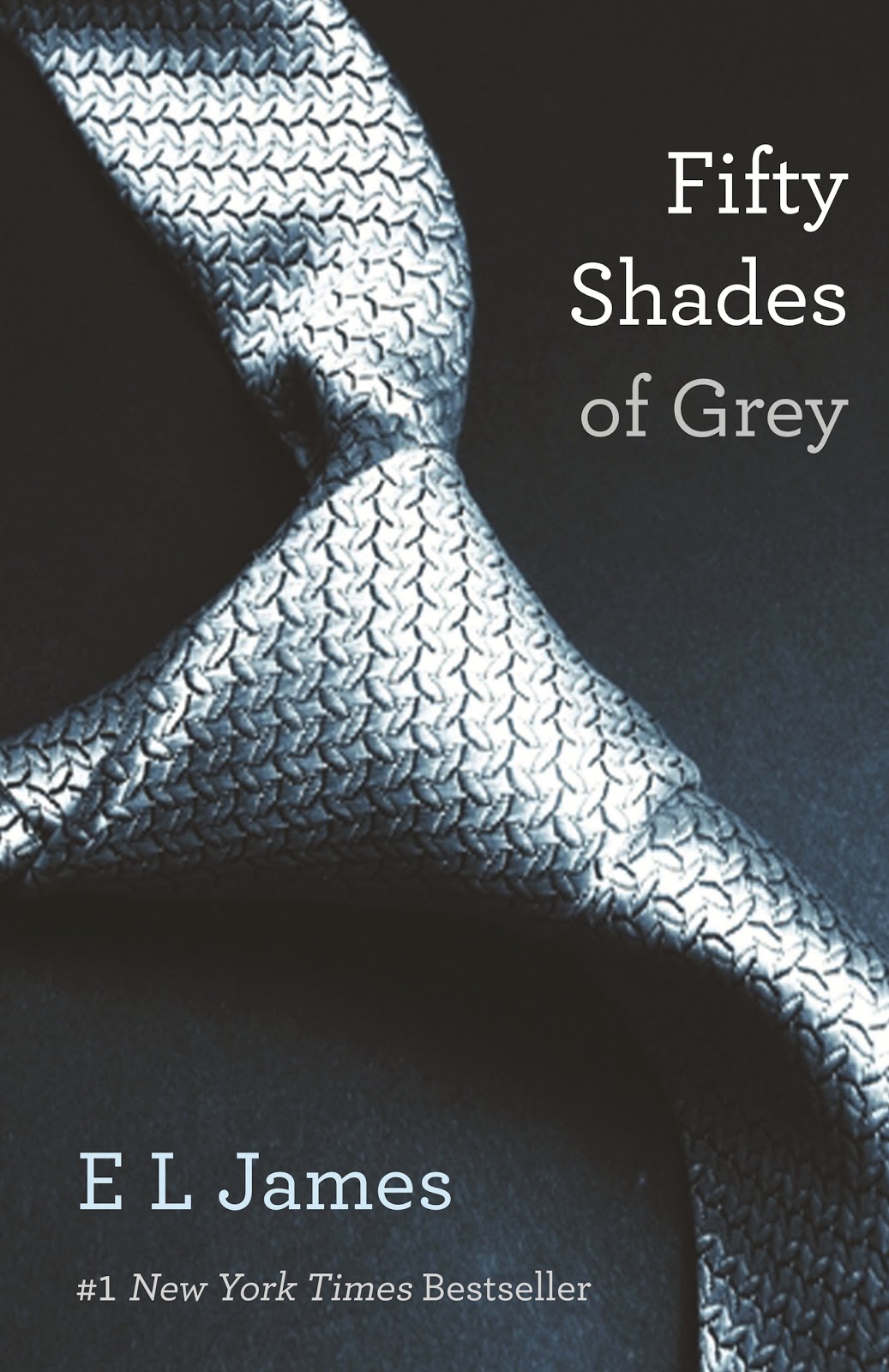
Fifty Shades of Grey (E L James)

Fifty Shades of Grey has given me little to analyze, no great plot to praise, no complex characters to critique.  The writing, while technically adequate, is stylistically deficient, and for readers with any experience in decent literature, the story is intolerably trite:  Smart but inexperienced girl (Anastasia Steele) meets handsome and cosmopolitan millionaire (Christian Grey).  Despite Anastasia’s deficit of social standing, Christian is smitten.  As the relationship develops, Ana discovers that Christian’s life has been less than perfect.  And it doesn’t go too far beyond that.

I’m sorry.  Is my snobbiness showing?  Let me temper it with some genuine praise:

As far as erotica goes, Fifty Shades of Grey is good.  Really!  While one must concede that the literary competition in that genre is meager, James does a fine job of keeping the sex hot but not lewd.  Her lexicon is tasteful, void of porn-style raunch and cutesy references for genitalia, but she doesn’t sound clinical either.

I’ll moralize for a moment about Christian and Ana’s dominant/submissive roles.  Frankly, the concept of the compulsorily submissive woman nauseates me, but Ana’s submission is - technically - voluntary. Still, she’s naive and deeply emotionally invested.  She clearly fears Christian at times and feels stifled in her self expression.  Psychologically, she’s quite entrapped.

Yes, the sex scenes are titillating and ... uh ... educational.  You’ll likely take away several useful ideas.  But, unfortunately, it gets repetitive.  Ana bites her lip and agitates Christian.  (A hundred times.)  She reaches for his chest and he refuses her.  (Over and over.  And over.)  She swoons when his pants hang on his hips.  (Almost every time she sees him.)  He revolts when she rolls her eyes.  (On practically every page.)  Her breath “hitches,” he touches her “sex,” she hears him tear “the foil wrapper,” and she gasps, “Oh, my!” (Ad nauseum.)

E L James
While Ana and Christian’s physical interactions are unquestionably erotic, they toe the line of battery at times.  Fifty Shades of Grey ends with the question of abuse unresolved, but James left me too apathetic to continue the series and see how - or if - there’s a healthy conclusion.  Eh... I’ll just wait and watch the movies. Maybe.