Translate

Wednesday, February 19, 2014

Big Brother (Lionel Shriver)


Lionel Shriver’s new novel, Big Brother, tells the story of a forty-something woman, Pandora, whose brother, Edison, has recently grown grotesquely obese. Pandora’s husband, Fletcher, on the other hand, is a fitness fiend and nutrition nazi. When Edison comes for an extended visit, Pandora is distraught by his dramatic upsizing, and she determines to help him lose weight. In the endeavor, her marriage is compromised, and therein lies the story.

I bought Big Brother after hearing an interview with Shriver (also the author of We Need to Talk About Kevin) on NPR. Having read Kevin, I already admired her work, and the concept of this new novel captured my acute attention. As expected, the actual reading was excellent. The story is intellectual and psychological. Shriver’s prose, as in Kevin, is rich with observation, analysis, and intent, as she addresses the base human drives of food, love, power, and ego. The primary plot is simple, but because the key elements are so universally experienced, it’s surprisingly alluring. 

Big Brother’s characters are multidimensional and believable. You’ll root for each of them and shake your head at them in turn. Pandora, who narrates the story, is the wallflower type. She rose to national notoriety somewhat accidentally with the surprise success of her custom doll business. Since she’s uncomfortable in the limelight, she takes deliberate steps to maintain her humility and normalcy. Conversely, her brother is a self-important, unctuous, jargon-spouting jazz pianist who left home straight out of high school and flourished on the New York music scene. In his middle age, his career deflated, but his ego ‒ and his body ‒ did not.

Obesity in America (from www.foodarian.com)
While the primary plot centers on Edison’s food issues, Pandora and Edison also reminisce about their unconventional upbringing, each from their own contrasting perspectives. Their mother’s tragic death was a suspected suicide, and their father, a Hollywood television actor, was more attached to his onscreen children than his biological progeny. Throughout the pages, Shriver deconstructs these complexities without the coldness of an overt psychoanalysis. Instead, it’s a show-and-tell of dysfunction, and Pandora is, mostly, the voice of reason.

The surprise ending isn’t ‒ obviously ‒ what you’ll be expecting. But it isn’t even what you’d expect for a surprise ending. It’s strangely settling and unsettling at once.My only criticisms of Big Brother tie back to We Need to Talk about Kevin. First, Pandora’s narrative style is identical to Eva’s (the protagonist in Kevin). Although Pandora’s characteristics and circumstances are effectively differentiated from Eva’s, both women are hyperanalytical intellectualizers with expansive vocabularies, which probably means that Shriver is too. Shriver’s mind and lexicon impress me, but if she can’t find unique voices for her first-person narrators, she might consider writing in third-person next time. Also, and mainly, Kevin is still Shriver’s masterpiece. The characters in Big Brother aren’t quite as gripping, the development not quite as driving, the climax not quite as spectacular.
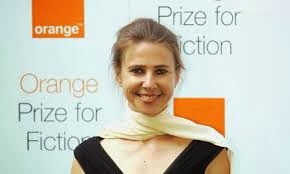
Lionel Shriver (from www.theguardian.com)
Nevertheless, Big Brother is a great psychological drama, and because of the subjects it addresses ‒ overeating and extreme dieting, marital power balances, family dysfunction ‒ it will easily appeal to most thoughtful readers. It certainly held my attention, exercised my mind, and earned my heartfelt recommendation.


Wednesday, February 5, 2014

Einstein: His Life and Universe (Walter Isaacson)


This book took me so long to get through. Sometimes I loved it. Sometimes I dreaded it. I mean, Walter Isaacson’s biography of Albert Einstein is comprehensive and often captivating, but for liberal-artsy me, the science stuff was agonizing. Because I wanted to offer you a decent review, I read the (many) physics-centric pages closely enough to get the general gist, but not, I’m afraid, a thorough understanding.

On the other hand, the chapters on his life, his family, his personality, are great. Einstein often comes off as an average schmo, which makes me love him more. I also love him more for his nonconformism and nonchalance, his maverick approach to his work, faith, and politics.

Per the author’s modus operandi, the book includes a cast of characters, extensive endnotes, and an index. He details Einstein’s childhood, education, and coming of age, his scientific pursuits, his shifting perspectives on politics and religion, but most interestingly to me, his tumultuous personal and professional relationships.

For example, it’s clear throughout the book that Einstein was generally good-humored, but he also had a special gift for making the wrong enemies. As a young adult, he sometimes thumbed his nose at the established academic leaders, provoking their uglier sentiments. Consequently, he struggled to land even a low-end academic job. Instead, he worked as an assistant in a Swiss patent office from 1902-1909. Years later, his professional relationships hadn’t improved much. He was passed over for the Nobel Prize several times due to ill will, and although he was eventually awarded the prize in 1921 after significant political maneuvering, it wasn’t for his famous relativity theories. Instead, it was for his services to Theoretical Physics, and especially for his discovery of the law of the photoelectric effect, an almost insulting token distinction.

Einstein’s closest personal relationships weren’t much cozier. He had a mysterious illegitimate daughter whom he quietly abandoned, a hostile first marriage, strained relationships with his two legitimate sons, and multiple affairs which he barely bothered to hide from his second wife, Elsa. He openly believed in and operated on the principle that monogamy is unnatural.

Einstein's Princeton home (from einstein-website.de)
But in less intimate contexts, his geniality shined. My favorite anecdotes occurred at his Princeton home, where he cheerfully helped neighborhood children with their math homework, and where he brought out his violin and accompanied carolers who came to his door. He was also a press favorite. While Einstein claimed to dislike media attention, his actions demonstrated otherwise: He accepted most opportunities for publicity and sprinkled the interviews with pithy witticisms.

The description of Einstein’s intellectual evolution shows how fundamentally human he was. As he aged, he followed the same pattern of spunk-to-funk that most of us do. Early in his career, Einstein’s theories were considered audacious and rebellious, and he criticized the closed-mindedness of his scientific elders. But he himself settled into stubborn conservatism later in life, refusing to work with the hypotheses of younger physicists, especially regarding the random aspects quantum mechanics. He believed in a meticulously ordered universe designed by an inscrutably intelligent (but not personally relational) God who would not “play dice.” So Einstein sought a unified field theory until his death. He never discovered that theory, nor has anyone else. Even though his creative productivity was diminished in that pursuit, he significantly - although unintentionally - contributed toward the advancement of quantum mechanics: By arguing against it, he forced the young physicists to prove him wrong, and they did, thus strengthening their new theories.

Isaacson also demonstrates how Einstein’s sociopolitical shift followed scientific process: When presented with hard evidence that he was wrong, he changed his position. Before the war, Einstein supported pure pacifism and total disarmament, but after the Nazis came to power, and then in light of Russia’s brutal post-war policies, his stance became more mixed and unorthodox. He supported some armed defense but disdained nationalism. He favored social welfare but preached for personal responsibility. These seemingly contradictory opinions prompted criticism about his political naivete.

Einstein and his violin (from th.physik.uni-frankfurt.de)
Einstein fervently supported intellectual freedom and was repulsed by Americans’ mindless communist witch hunts. And, in the spirit of those witch hunts, he was consequently suspected of communism. Although the FBI compiled a large dossier of allegations against him, they never found anything incriminating. But he wasn’t altogether disrespected for his politics. In 1952, the new-ish nation of Israel offered Einstein the presidency. He declined. He was a great physicist, but not a great politician or manager, and he knew it.

Einstein died of an abdominal aortic aneurysm in a Princeton hospital at age 76, but the book continues because, well, the story doesn’t end. He was cremated per his wishes, except for his brain, which was - without Einstein’s permission or his family’s - commandeered by the pathologist who performed his autopsy, sliced up, and rather indiscriminately distributed among various neurologists for what turned out to be mainly haphazard research, very little of which proved beneficial for scientific purposes. Because of the method the pathologist used to preserve the brain, DNA cannot even be extracted from it.

Walter Isaacson
From Einstein’s birth to his traveling brain, Walter Isaacson has constructed another thorough biography - a little too thorough for my preferences this time. I can’t criticize though. Physics isn’t my passion, but it was Einstein’s, and after all, this is his story. Space-time-energy lovers will be all over this book. But if you’re more poetry-and-ice-cream like me, skim through that shiz, and eat up the descriptions of Einstein’s character - his optimism, determination, conviction, nonconformity. Celebrate his curiosity, which was his master, and he its happy servant. I wish I had passion like that.


Sunday, September 29, 2013

Water for Elephants (Sara Gruen)


I picked up Water for Elephants on a whim because I liked the title and the premise was cool: Old-timey circus workers rescue a trained elephant from cruelty. I understood that, while the story was fiction, the author did some research and incorporated several real-life incidents. So, based on this, I actually crossed the threshold of a physical Barnes & Noble, picked Water for Elephants off a wooden shelf, and presented my plastic card to a human cashier. For all this effort, I truly hoped the novel would be superb. In some ways, it was.  But overall, no.

Water for Elephants is the story of the struggling Benzini Brothers circus, for which the main character and narrator, Jacob Jankowski, works as a veterinarian. Jacob falls in love with Marlena, a kind and beautiful performer. Unfortunately, Marlena is married to the violently temperamental animal trainer, August. When the circus acquires an elephant, Jacob and Marlena struggle together to defend the sweet pachyderm against August’s rages. The story divulges the slimy underbelly of circus life, including gross mistreatment of both human workers and animals, right up to the stunning climax when Marlena ends August’s reign of terror.

Photo from www.nonhumanslavery.com
Gruen alternates the novel’s setting between a contemporary nursing home where 93-year-old Jacob now lives in a state of semi-dementia, and the 1931 traveling circus. In the nursing home, as Jacob waits for his family to escort him to a modern circus, he wafts in and out of lucidity and mentally revisits his old Benzini Brothers days. Although the flashback technique feels a little worn and, in Gruen’s hands, contrived, it does set up a finely constructed and sentimental ending, which is one of the novel’s strengths.

Aside from the tender conclusion, the story itself has other redeeming qualities. The plot is engaging enough to keep you reading, especially as it nears the climax. Also, Gruen exposes the abuses that occurred in depression-era circuses and, which I fear, probably still exist to some extent. Several scenes are emotionally excruciating, but responsible consumers should be aware of ugly realities.

Unfortunately, Water for Elephants also disappoints.  First, the characters are shallowly constructed. I didn’t walk away with a lasting identification with any of them, and in fact, by the time I wrote this post, I had to look up all of their names. Also, Gruen’s writing style is flat and unmemorable. While the premise was promising, her blasé rendering diminished what might have been a great novel in the hands of a more skilled wordsmith.

Photo by Lynne Harty (saragruen.com)
If you care about animals, you want a good story, and you’re not a finicky reader, then step right up! Water for Elephants will entertain and amaze, and it may even spur you to reconsider your attitude toward traveling animal shows. But if you’re hungry for something profound and beautiful, then move along, folks. There are lots of bigger, better shows out there.


Saturday, August 3, 2013

Fairy Tale Interrupted (RoseMarie Terenzio)

My sister suckered me into another JFK Jr. book. And I liked it. The first one, What Remains, was a lovely read by Carole Radziwill, the wife of John Junior’s cousin. While John isn’t the primary player in that memoir, RoseMarie Terenzio’s Fairy Tale Interrupted is unquestionably John-centric. Terenzio was John F. Kennedy Jr.’s personal assistant and was therefore privy to practically every detail of his life. And she shares a lot of that detail. Her stories are neither all-out scandalous nor across-the-board flattering. Instead, she describes John as someone both good and bad like most every man, but simultaneously so overtly unlike any other man. Overall, he comes off favorably, as someone who, despite his birthrights of extreme pressure and privilege, remained publically loved and privately liked.


Terenzio tosses in some tidbits on her own life too - family and friends, successes and failures, her struggle to be taken seriously - much of which is moderately interesting. But it’s not the reason you’ll read this book.

Map of JFK Jr.'s crash site (from jfkjr.com)
Although Fairy Tale Interrupted lacks the linguistic grace of What Remains, the writing quality isn’t horrible. Maybe Terenzio penned it herself, but it has a ghost-written vibe. No matter. If you want JFK Jr. stories more than pretty words, this book is for you. Terenzio dishes. She describes her awkward introduction to John and the development of their gibing relationship. She discusses his parentage over George magazine, his maneuvering for its legendary covers, and the personal burden he bore over its financial and popular struggles. She talks about John’s charm, his temper, his ditziness, his stalkers, his mountains of crazy mail...about Carolyn Bessette’s big heart and calming influence...about the ups and downs of their courtship, the top-secret wedding planning, and their often angst-ridden marriage...about their insatiable smoking habit, their high-fashion circle, and the intense pressure of the paparazzi, to which John was accustomed, but which drove Carolyn to tears and stole her natural joy.


Of course, Terenzio also tells the story of John and Carolyn’s deaths, and her perspective as both intimate friend and critical employee means that you’ll get the kind of detail you simply can’t find elsewhere. From her, you’ll learn the unsettling personal events immediately preceding their fated flight. You’ll better understand how the sudden loss handicapped George’s PR, provoked the media’s worst instincts, and roused the public’s best sentiments. But you’ll also see the up-close-and-personal side - how their deaths debilitated RoseMarie, as her entire raison d’etre was gone.

RoseMarie Terenzio
While you’ll never find Fairy Tale Interrupted listed in a roster of the literary greats, it is an impressive chronicle of John F. Kennedy Junior insider information. You’ll be humored and touched by Terenzio’s simple, heartfelt remembrances of one of the world’s most iconic men.


Sunday, July 7, 2013

The Giver (Lois Lowry)

The Giver is a Newbery medal-winning juvenile fiction featuring Jonas, a preteen boy of unusual equanimity who lives with his family in a highly controlled community. The town’s systematic management results in what appears to be, in many ways, a nearly idyllic environment. Families, with rare exceptions, get along well. There is gender equality and a fair amount of autonomy. People enjoy their work. All needs are met. Crime is rare, and personal contentment flourishes.

When the community’s twelve-year-olds are assigned their careers, Jonas is named the new Receiver, a position of singular distinction and great honor. In this role, he must receive and safely guard all ancient memories of the society, never sharing them with the other members of the community, because the memories will threaten the peace. As Jonas receives these memories, he begins to understand the enormity of the sacrifice required to sustain their ordered society. The more memories he receives, the less he can conform with the society and, in small ways, he starts to buck the system. Finally, he makes one huge move that will alter not only his life but the entire community irreparably.
  
"But suddenly Jonas had noticed...the apple had changed."
Based on the rave reviews I’d heard (from friends and family, on NPR, and on Amazon), I was expecting The Giver to be great. Instead, I found it, on the whole, only pretty good. The premise is spectacular, and the story will make children and adults reconsider much of what’s important and beautiful in our flawed world. But the book is undersatisfying because of what the author omits. First, Lowry fails to portray the community’s system as wholly undesirable. I admit, this may be deliberate and not an entirely bad move; the ambiguity can spur discussion and debate in a classroom of young readers. Nevertheless, I was hoping for a deep, dark dystopia. Yes, the story is written for a juvenile audience, and maybe that’s why Lowry keeps it fairly light. But I think that middle-school kids can - and should - handle more intense material. Ironically, and probably unintentionally, Lowry treats her audience like Jonas’s community: She overprotects them, and as a result, they lose an opportunity for emotional growth.

Worse yet, Lowry completely ignores huge and crucial elements of the story. We never see what happens within the community upon Jonas’s final rebellion, and we hardly know what becomes of Jonas either. Just when the book should ramp up, it ends. Maybe Lowry intentionally keeps the book short for her young audience, but if so, she underestimates them again. Children will read a long book if it’s great, and The Giver should have, could have been incredible. Perhaps Lowry will extend it into a series. Unfortunately, I’ve seen no indication of that so far.

Lois Lowry
Lowry’s writing style is perfectly appropriate for preteens. It’s simple but not childish, always clear, well-paced, and engaging. Without question, The Giver will help children and adults understand the importance of diversity and discomfort, as well as the drawbacks associated with heavy controls. Also without question, its premise could have been even more poignant if Lowry had gone bigger and bleaker. I’m casting my ballot for a redeeming sequel.


Saturday, June 8, 2013

Beginnings: The First Love, the First Hate, the First Dream...Reflections on the Bible's Intriguing Firsts (Meir Shalev)

Meir Shalev had already enchanted me with his storytelling genius, his easy charm, and his unobtrusive humor through his memoir, My Russian Grandmother and Her American Vacuum Cleaner. So, even though Beginnings was an entirely different genre on an entirely different topic, I was pretty sure I’d enjoy it.

Maybe it was the less personal subject matter, or maybe the translator (Stuart Schoffman) wasn’t as great, but Beginnings didn’t thrill me as much. Don’t get me wrong - I liked it. But it’s not as magical as My Russian Grandmother. Shalev’s voice is still friendly and sharing, and his wit still shows up, although more sardonically and less frequently. With My Russian Grandmother, it’s like Shalev amuses you with his stories over pizza and beer. With Beginnings, you picture him at a university lectern. Same nice guy, radically divergent circumstances.

In Beginnings, Shalev reviews several of the most familiar Bible stories, but his thorough analysis deepens and freshens them. With an easy, approachable style, he offers backstory and perspective that you probably never heard in synagogue or church. He does some small moralizing, but no proselytizing. His discussion feels more intellectual and literary than religious.

Genesis 1:1, from an illustrated 1932 Polish Torah
Here are a couple of my critical observations. First, don’t let the title fool you. “The Bible’s Intriguing Firsts” turn out to be, in many cases, Shalev’s setup for “the first important” and sometimes even “the most important.” For example, the “First Law” chapter only briefly mentions the actual first law in the Bible. Shalev then segues into a lengthy (albeit interesting) discussion of the Ten Commandments. Similarly, since the first king mentioned in the Bible is not a primary player in Hebrew history, Shalev analyzes King Saul instead, and then continues with a thorough discourse on King David.

Also, be aware that Shalev doesn’t treat the Bible as the unquestionable truth, nor does he approach it as fiction. Instead, his stance seems somewhere between: The Bible is a work of literature to be greatly respected and generally accepted, but questioned where questions beg the asking. Throughout the book, he draws conclusions that seem to be a stretch, but for all we know, may be true (for example, that Joseph was gay and was sexually assaulted by his brothers). For context and evidence, Shalev often cites historical documents, rabbinical writings, and other extra-biblical sources.

Meir Shalev (copyright Bastian Schweitzer)
If you’re idealistic about the biblical example, or if you’re a champion for the infallibility of scripture, you’ll be disappointed with several of Shalev’s opinions. He criticizes our old heroes, particularly their treatment of women and animals, and he decries God’s undue violence in dealing with His humans. Some of Shalev’s opinions might even be considered heretical, whether you’re Jewish or Christian or both.

But if you’re not pre-stocked with rigid convictions, or if you welcome challenging ideas, you’ll eat this up. Beginnings is rich with novel interpretations, and for a scholarly text, the discourse is surprisingly accessible. It’s a good opportunity to see the serious side of Shalev.


Sunday, April 7, 2013

We Need to Talk About Kevin (Lionel Shriver)


When I heard an interview with Lionel Shriver, the author of We Need to Talk About Kevin, on NPR, I was fascinated not only by the discussion of the too-pertinent story of Kevin Khatchadourian, a teenager who shoots up his school, but also by Shriver’s own non-pandering demeanor. I knew immediately that I liked this author and wanted to read her book.


The story is written as a series of letters from Kevin’s mother, Eva, to her her estranged husband, Kevin’s father, Franklin. The dense and formal prose is somewhat unexpected and intimidating, but it establishes Eva’s character perfectly: She’s a highly successful travel writer by trade, and she can be conspicuously cosmopolitan and condescending.


Eva misses Franklin, and her letters read like a sort of self-therapy. She recollects the entire marriage, beginning with their indecision, and finally, decision to have a child. Her monologue is largely philosophical, especially in the beginning. Although the story moves slowly until her pregnancy, you should read these early chapters with patience and care, as they establish the critical dynamics of Eva and Franklin’s separate relationships with Kevin. Once Kevin is born, the story gains momentum with astounding episodes of his schemes and deviances.

Eva’s character is brilliantly complex. You probably won’t think, “Gee, I like this girl!” But still, you will feel some empathy - even genuine sympathy - for her, as she is shockingly honest about her most unflattering thoughts. Yes, she can be pompous, but she wants and tries to be a good mother to Kevin despite her inclinations toward the opposite, and despite his repellant behaviors, as he deliberately and systematically destroys any semblance of her formerly pleasant life.

Franklin, on the other hand, is simple, and pathetically so.  He’s a good-hearted, true-blue kind of guy, the type of person you’d want for your kid’s elementary school teacher, but probably not for your psychoanalyst, and certainly not for the father of the sociopathic teenager next door. Undiscerning of anything outside his cheery, perfect-family bubble, he quickly evolves into Kevin’s oblivious lackey.

From conception, Kevin doggedly commits his existence to the discomfiting of others and the destruction of expressions of love. He seems inherently evil and utterly unlikeable. But through one small event in a novel full of horrible acts, Shriver complicates his character and uncovers the tiniest goodness - or at least normalcy - in him. This is the one thing that keeps the reader in awe of Kevin despite the inevitable revulsion.

I wonder if Kevin’s behavioral profile is similar to that of real-life mass murderers.  Can a person actually be as staunchly hostile as Kevin is from birth?  I don’t know how Shriver researched the story, and I’m too lazy to do the work myself, but if you can knowledgeably answer my question, please comment!

Shriver’s erudite prose requires that her reader is no dummy. The language may be daunting at first, but the telling is so eloquent and detailed, the vocabulary so precise, that, if you don’t rush, you’ll get an alluring view into the psyche of one of modern literature’s most multidimensional protagonists.

Lionel Shriver (photo by Walnut Whippet)
If your edition of Kevin includes the “p.s.” in back, don’t skip it!  In three separate sections, Shriver writes a quirky little bio, discusses the book itself, and briefly summarizes several other novels she recommends (including only one of her own). Her written voice is classy and sassy. I admired her writing so much that I also must respect her literary opinion, and I therefore added several of her recommendations to my Better-Read-That list.